
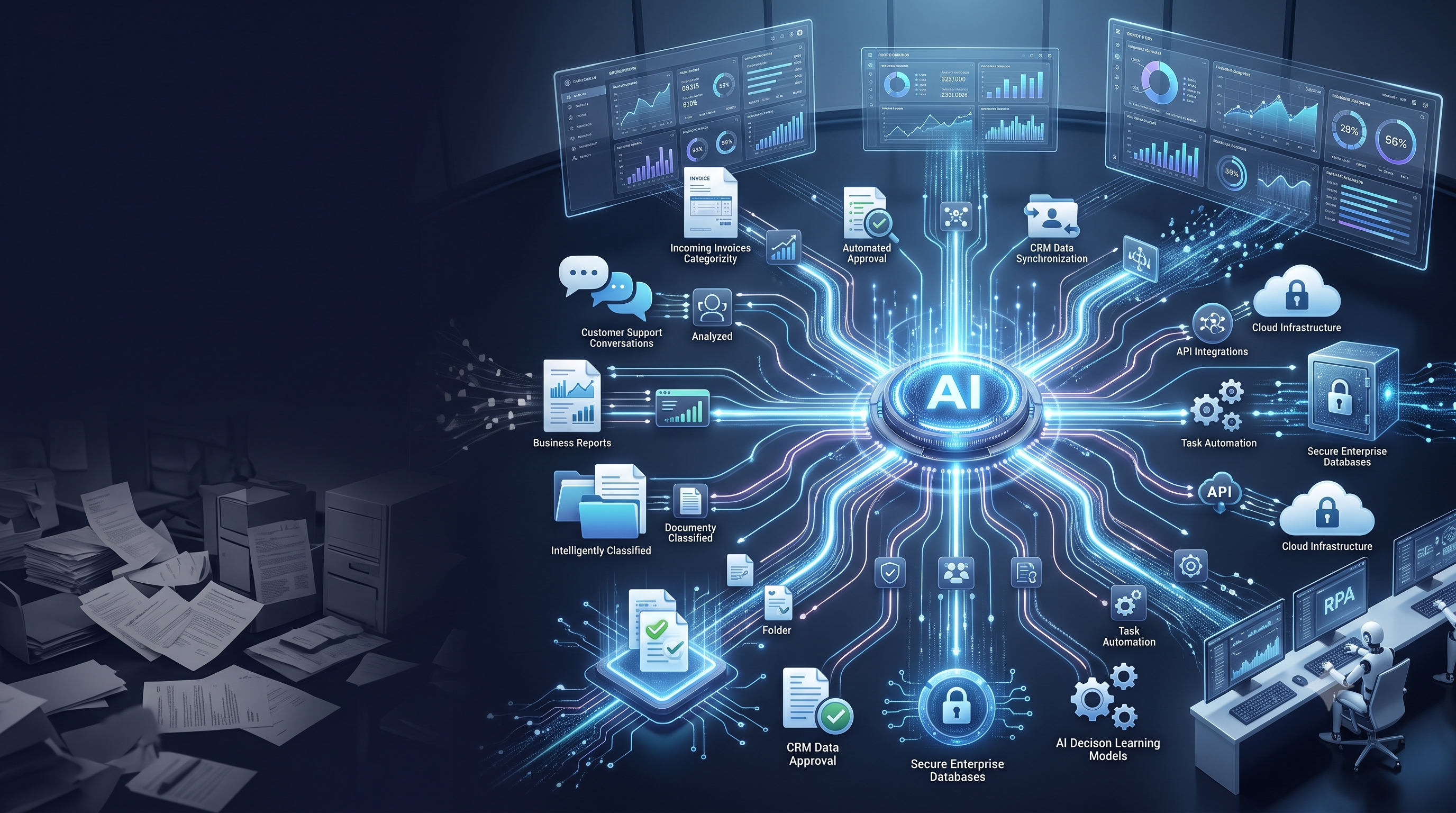
Applying intelligent machine learning frameworks within an enterprise operational model requires more than deploying basic third-party API wrappers. True business scale demands intentional data classification logic, strict validation boundaries, and highly efficient workflow pipelines that operate without unexpected system lag or execution drift.
1. Eliminating Manual Bottlenecks via Smart Processing
Every enterprise company manages dense streams of unorganized asset variables—invoices, customer interaction logs, internal requests, and dynamic reporting matrices. By routing these items through dedicated smart processing structures, systems can automatically parse key parameters, tag internal dependencies, and trigger appropriate subsequent execution loops without manual oversight.
This systematic extraction method translates directly into decreased operational latency. By letting intelligent automation clear clerical backlogs, staff resources are instantly released to focus entirely on client lifecycle care and revenue generation tasks.
2. Custom Machine Learning vs Commercial Wrappers
Generic public automation models introduce structural data isolation constraints and operational predictability variables. When processing highly specialized or sensitive corporate datasets, utilizing custom models ensures absolute compliance containment and prevents downstream classification shifts. Our software design approach focuses on analyzing your operational data dependencies deeply to construct localized prediction matrices.
These deterministic models align flawlessly with pre-existing database structures, maintaining high integrity boundaries across all data clearings.
"Bespoke intelligent applications map exactly to existing software endpoints, delivering custom processing control without altering underlying storage rules."
3. Strategic Value Injections and Operational Optimization
A well-executed automation platform functions as a core value asset across your business life cycle. By deploying efficient processing agents, systems minimize time-to-fulfillment delays and systematically reduce error rates. This ensures your software systems adapt dynamically as operational parameters grow.
Transitioning to modern artificial engineering safeguards your competitive roadmap against future digital ecosystem shifts, making your digital ecosystem future-proof.